Technical Analysis of Flexible Circuit Board
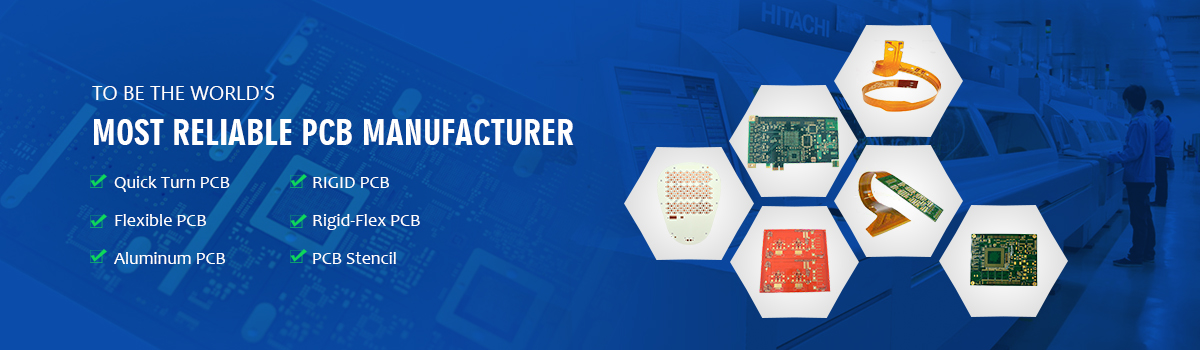
Flexible PCB is also called Flexible Printed Circuit Board, Flexible Circuit Board. According to the definition of IPC, Flexible Printed Circuit Board (FPC) is a product that designs and manufactures circuit graphics on flexible substrates by means of printing.
Flexible circuit board is an important kind of circuit board. Its characteristics are as follows:
(1) Flexible circuit board is small in size and light in weight.
(2) Flexible circuit boards can be moved, bent and twisted.
(3) Flexible circuit boards have excellent electrical properties, dielectric properties and heat resistance.
(4) Flexible circuit boards have higher assembly reliability and assembly operability.
(5) Flexible circuit boards can be installed with three connections.
(6) Flexible circuit boards are conducive to thermal diffusion.
(7) Low cost.
(8) Continuity of processing.
Flexible circuit boards are small in size, light in weight, and can greatly reduce the volume of devices. They are suitable for the development of electronic products in the direction of high density, miniaturization, lightweight, thinness and high reliability. They have high flexibility, can bend freely, winding, twisting, folding, and can be three-dimensional wiring. They can be arranged arbitrarily according to the requirements of spatial layout, and can change shape. Arbitrary movement and expansion in three-dimensional space can achieve the integration of assembly and wire connection.
Flexible circuit boards have excellent electrical properties, high temperature resistance, fire resistance, chemical stability, good stability and high reliability.
It has higher assembling reliability, provides convenience for circuit design, and can greatly reduce the assembly workload. It is also easy to ensure the performance of the circuit and reduce the cost of the whole machine.
Additional mechanical stability can be achieved by increasing the strength of the flexible substrates by using reinforcing materials. The design of rigid-flexible bonding also compensates for the slight deficiencies in the load-carrying capacity of the flexible substrates to a certain extent.