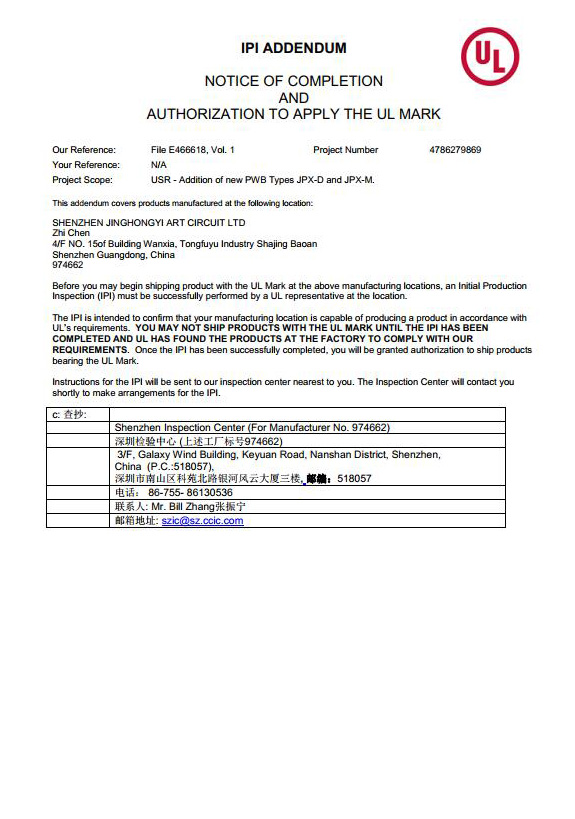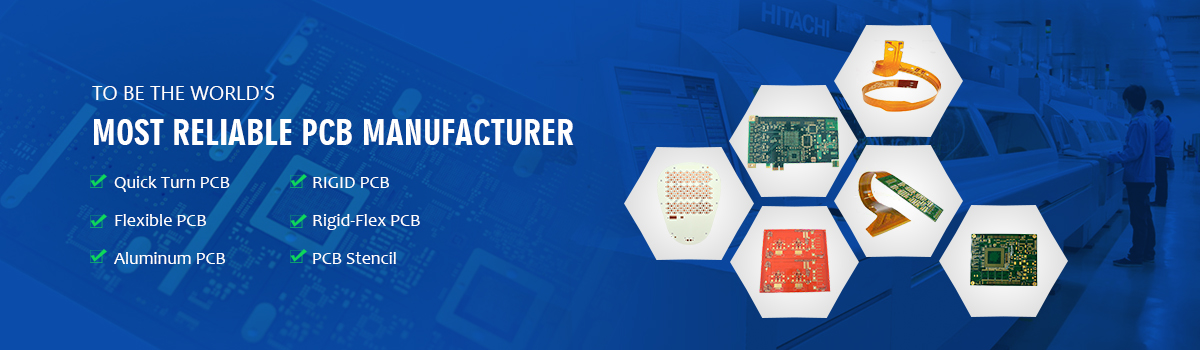
Jinghongyi PCB is a professional PCB manufacturer with rich PCB manufacturing experience and extensive PCB manufacturing capability to meet the quality, precision, and performance demands for the latest technology requirements.
Below is a list of the several common types of printed circuit boards you should know.
Single Layer PCB
Single layer printed circuit boards are among some of the simplest to design and manufacture. These boards have a single layer of conductive material (such as copper) on only one side of a non-conductive substrate.
Double Layer PCB
Double layer PCBs have one conductive layer on top of a non-conductive substrate and another conductive layer on the reverse side (top and bottom layers). The two conductive sides can be connected using plated holes in the substrate that connect to pads on both sides of the circuit board; these are called vias.
Multi-Layer PCB
This term refers to a circuit board that has three or more conductive layers. The conductive layers are at the top and bottom, as well as at least one conductive layer sandwiched between non-conductive substrate. Advanced Circuits has the capability to fabricate up to 40 layer boards, but the most commonly used have lower layer counts such as 4, 6, or 8 layer boards.
High Density Interconnect (HDI) PCB
HDI PCBs take advantage of precision based manufacturing technology to pack as much functionality into a small space. This is done by using many conductive layers, laser drilled microvias, fine lines and tolerances, and advanced laminate materials. HDI PCBs can accommodate the complex routing of high pin count chips and other high-tech miniaturized components.
High Frequency PCB
The main difference in manufacturing high frequency printed circuit boards pertains to the design itself. These PCB are designed to facilitate signals over 1 gigahertz. Depending on the application, high frequency printed circuit boards may require the use of advanced laminate materials and controlled impedance.
LED PCB
LED PCB has many other names, such as LED PCB board, LED circuit, LED Circuit Board, led printed circuit boards, PCB board for LED.
In a sense, LED PCB and Aluminum PCB belong to the same kind of PCB products, because their uses and materials are mostly the same.
With the popularization and widespread use of industrial lighting and civil lighting, whether outdoor or indoor, family or commercial buildings and factories, lighting provides the guarantee of its normal operation.
Flexible PCB
lexible PCB, also known as Flexible electronics, flexible circuit board, Flex PCB , flex circuits, is a technology for assembling electronic circuits by mounting electronic devices on flexible plastic substrates, such as polyimide, PEEK or transparent conductive polyester film. Additionally, flex circuits can be screen printed silver circuits on polyester. Flexible electronic assemblies may be manufactured using identical components used for rigid Printed Circuit Boards, allowing the board to conform to a desired shape, or to flex during its use. An alternative approach to flexible electronics suggests various etching techniques to thin down the traditional silicon substrate to few tens of micrometers to gain reasonable flexibility, referred to as flexible silicon (~ 5 mm bending radius).
Impedance Control PCB
Impedance control has been one of the essential concerns and tough problems in high-speed PCB design. Impedance is the sum of the resistance and reactance of an electrical circuit. The resistance being the opposition to current flow present in all materials. In high frequency applications, controlled impedance helps us ensure that signals are not degraded as they route around a PCB. Resistance and reactance of an electrical circuit have a major impact on functionality, as certain processes must be completed before others to ensure proper operation.
Gold Fingers PCB
In today's computerized and mobile-activated world, signals are sent between numerous devices. For each command to be enacted, communication must be made between two or more circuit boards. None of this would be possible without gold fingers, which serve as the connecting contacts between motherboards and components like graphics or sound cards.
JingHongYi PCB manufacturing capabilities range from the simplest of designs to the most complex builds with rigorous design requirements. Our capabilities include laser-drilled microvias, cavity boards, heavy copper up to 20 oz., via-in-pad, microwave & RF boards, up to 40 layers and others. We are your one-stop solution to all of your printed circuit board manufacturing. For more information about our PCB capabilities and services, contact your Sales Representative or Send email to us.